
Reviewed By Dr. Jeffery Kesecker, DDS
Reading Time: 3 minutes
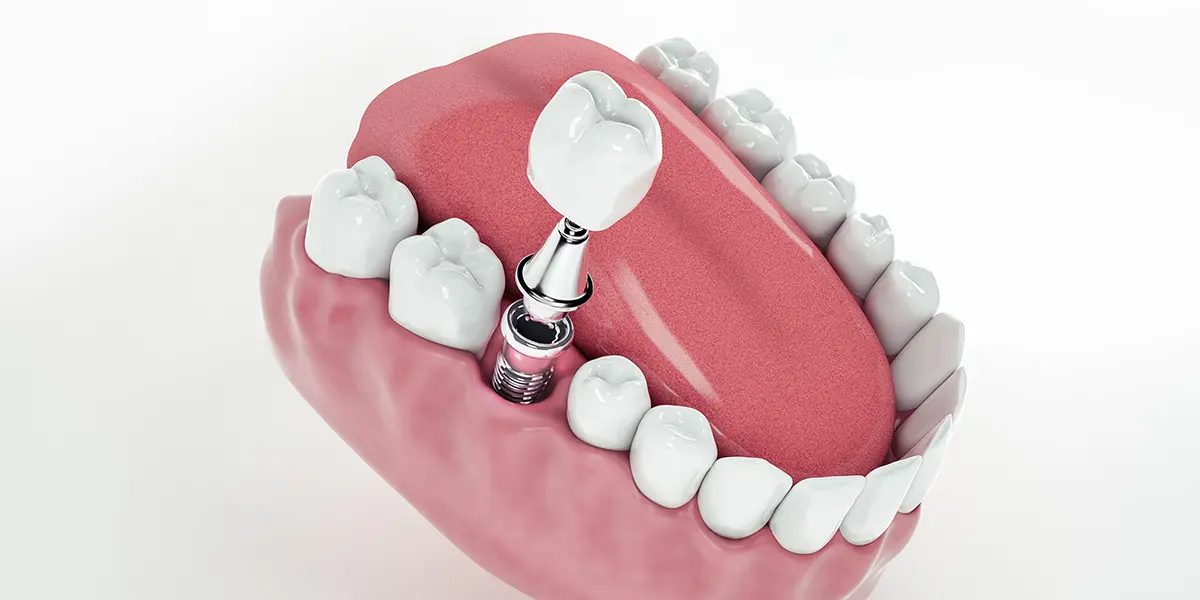
A dental implant replaces missing teeth by restoring both what you see above the gum line and what anchors the tooth below it. Each component has a specific role in stability, function, and appearance, and together they allow an implant to function much like a natural tooth.
Legacy Surgery offer dental implants in Harrisonburg and Staunton, VA.
Table of Contents
What Are the Parts of a Dental Implant?
The parts of a dental implant include three main components: the implant post, the implant abutment, and the dental restoration. Each part serves a distinct role, and together they create a stable, long-lasting replacement for a missing tooth.
The Implant Post
The implant post, also called the implant fixture, is the foundation of the dental implant. It is a small, screw-shaped piece that is placed into the jawbone in a surgical procedure.
Its primary role is to replace the natural tooth root and provide support similar to natural teeth. Over time, the bone heals around the post through a process called osseointegration. This biological bonding is what gives dental implants their stability and allows them to withstand normal chewing forces.
The implant post anchors the entire restoration securely in the jaw. It helps preserve jawbone density by stimulating the bone during chewing. It also provides long-term structural support similar to a natural tooth root.
The Abutment
The implant abutment is the connector that joins the implant post to the visible tooth replacement.
Abutments vary based on anatomy and treatment goals. Common variations include prefabricated abutments made in standard shapes and sizes, as well as custom abutments designed to match the patient’s gum contour and bite.
The abutment transfers chewing forces from the restoration to the implant post. It supports proper alignment of the final tooth and helps achieve a natural-looking emergence from the gum tissue.
The Dental Restoration (Crown, Bridge, or Denture)
The dental restoration, sometimes called the implant restoration or dental prosthetic, is the visible part of the dental implant. It is the component that looks and functions like a natural tooth.
Depending on how many teeth are being replaced after tooth loss, the restoration may be a dental crown for a single missing tooth, a bridge supported by two or more implants, or a denture secured to multiple implants for full-arch replacement.
Restorations are typically made from durable, tooth-colored materials designed to withstand daily function while blending naturally with surrounding teeth. This final component restores chewing efficiency, speech clarity, and the appearance of a complete, natural smile.
Once attached, the restoration completes the system, allowing the parts of a dental implant to function together as a single unit.
Dental Implants at Legacy Surgery
At Legacy Surgery, dental implants are placed with careful attention to how each component works together for long-term stability and function. If you have questions about dental implants or want to learn whether they may be appropriate for your needs, contact our oral surgery team for guidance.
To book a dental implant consultation at our oral surgery office in Staunton, call (540) 213-8750 or visit us at 110 Mactanly Pl C, Staunton, VA.
📍Other location
Legacy Surgery in Harrisonburg, VA
(540) 437-1230
2071 Pro Pointe Lane, Harrisonburg, VA
FAQs
Can I get dental implants if I have gum disease?
Possibly, but gum disease must be treated and controlled first. Healthy gum tissue and stable bone are essential for implant success, so your oral surgeon will evaluate your gums and recommend periodontal treatment before implant placement if needed.
Can I get dental implants if I smoke?
Smoking does not automatically disqualify you, but it does increase the risk of implant complications. Smoking can slow healing and interfere with osseointegration, so quitting or reducing smoking before and after implant surgery is strongly recommended.
How long does the crown last on a dental implant?
How long does the crown last on a dental implant?
A dental crown on an implant typically lasts 10 to 15 years or longer. Its lifespan depends on oral hygiene, bite forces, and regular dental care. In many cases, the crown may need replacement before the implant itself.
How long does a dental implant last?
With proper placement, good oral health, and routine dental visits, a dental implant can last decades and often a lifetime. Long-term success depends on bone support, gum health, and consistent home care.