
Reviewed By Dr. Jeffery Kesecker, DDS
Reading Time: 3 minutes
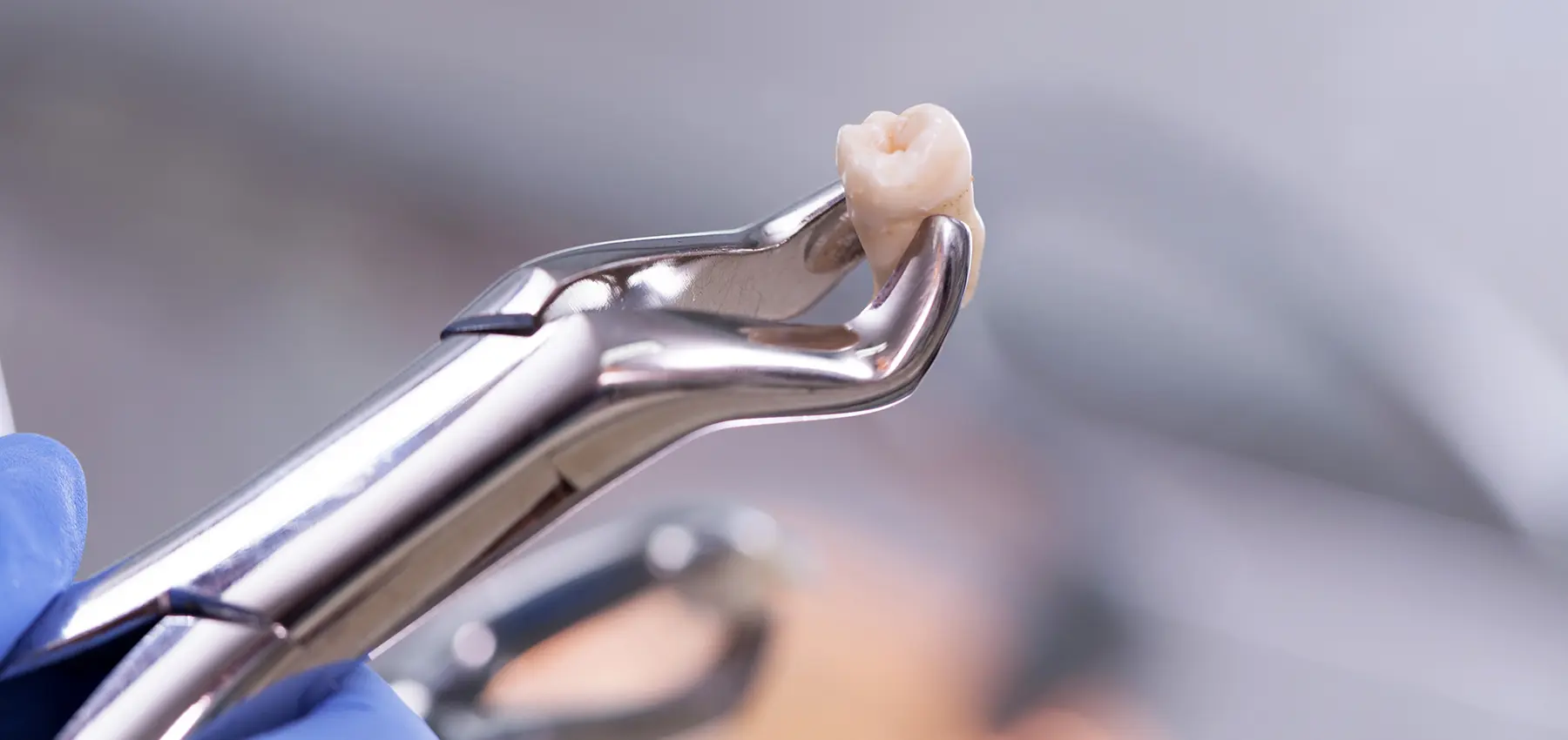
A simple tooth extraction removes a tooth that can be reached above the gums, while a surgical extraction involves additional steps to remove a tooth that is difficult to access or remove. The approach depends on the tooth’s condition, position, and how easily it can be removed.
Table of Contents
Why Would You Need a Surgical Tooth Extraction?
Even a tooth that is visible above the gums may need surgical removal if its condition or position makes a simple extraction difficult.
Common reasons include:
- A tooth broken at the gumline: There may not be enough visible tooth to grip and remove.
- Severe decay: A badly damaged tooth may be too fragile to remove in one piece.
- Impacted teeth: A tooth that has not fully emerged may be covered by gum tissue or bone.
- Difficult root anatomy: Long, curved, or unusually shaped roots can complicate removal.
A dental examination and X-rays help us determine which approach is appropriate.
What Happens During Each Type of Extraction?
Both procedures begin with anesthesia to numb the treatment area. The main difference is how we access and remove the tooth.
Simple Tooth Extraction
During a simple extraction, we loosen the visible tooth with dental instruments and remove it from its socket. An incision in the gums is generally unnecessary.
After removal, gauze is placed over the socket to help control bleeding and support blood clot formation.
Surgical Tooth Extraction
A surgical tooth extraction may involve making a small incision in the gums, removing some surrounding bone, or dividing the tooth into sections so it can be removed more easily.
The steps depend on the tooth’s position and root structure. Stitches may be placed when needed to close the gum tissue.
Does Recovery Take Longer After a Surgical Extraction?
Recovery may take longer after a surgical extraction because the procedure can involve more of the surrounding gum tissue or bone. You may experience additional soreness or swelling, depending on how involved the removal was.
Most patients begin feeling better within several days, although the socket and surrounding bone continue healing after the initial discomfort improves.
For either type of extraction, follow your postoperative instructions and protect the blood clot during early healing. Contact our office if you experience worsening pain after the first few days, persistent bleeding, fever, or swelling that continues to increase.
Planning for Tooth Replacement
If the tooth being removed needs to be replaced, discussing your options beforehand can help with treatment planning. For patients considering a dental implant, we can evaluate the surrounding bone and determine whether bone grafting may help preserve the extraction site.
The type of extraction does not, by itself, determine when an implant can be placed. Timing depends on the condition of the bone, the presence of infection, and the overall treatment plan.
FAQs
Do all wisdom teeth require surgical extraction?
No. Wisdom teeth that have fully emerged through the gums may be removed with a simple extraction if they are easy to access. However, impacted wisdom teeth or those with complicated root structures often require surgical removal.
How long does a surgical tooth extraction take?
The time depends on the tooth’s location, root structure, and how difficult it is to remove. A straightforward extraction may take only a short time, while a more complicated procedure can take longer. We can give you a better estimate after evaluating the tooth.
Can a regular dentist perform a surgical extraction?
Some general dentists perform surgical extractions, while others refer more complicated cases to an oral surgeon. A referral may be appropriate when a tooth requires specialized surgical planning.
Are stitches always needed after a surgical extraction?
Stitches may be used when gum tissue needs to be closed, but they are not necessary for every surgical extraction. Depending on the type, they may dissolve on their own or require removal.
Tooth Extraction Care at Legacy Surgery
At Legacy Surgery, Dr. Jeffery Kesecker provides tooth extraction care for patients throughout the Shenandoah Valley. If you have been told that a tooth needs to be removed, contact us to schedule an evaluation and discuss your options.
To book an appointment at our oral surgery office in Harrisonburg, call (540) 437-1230, or visit us at 2071 Pro Pointe Ln, Harrisonburg, VA 22801.
To book an appointment at our oral surgery office in Staunton, call (540) 213-8750 or visit us at 110 Mactanly Pl C, Staunton, VA 24401.